The Ten Essentials
The Ten Essentails are items that you should always carry when you are going afield.
The original Ten Essentials list was assembled in the 1930s by The Mountaineers, a Seattle-based organization for climbers and outdoor adventurers.
In 2003 the group introduced the "systems" approach in its seminal text on climbing and outdoor exploration,
Mountaineering: The Freedom of the Hills (The Mountaineers Books, 2010).
The "Systems" approach is the one presented here."
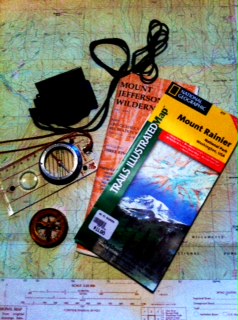
1. Navigation (map and compass)
First, learn how to use a map and compass. Carry a topagraphic map(s) that covers more than the area you will be traversing. Do not rely on trail guides or handouts.
Any compass style will work. A base plate style work best with for map work.
A GPS is great but don't solely rely on one. Batteries can go dead and the GPS radio signal is line of sight between the sattalite and your device. High ridges and dence forest can block the signel. Always carry a compass and map.
An altimiter is a great navation tool, but with all navigation tools learn their limitations.
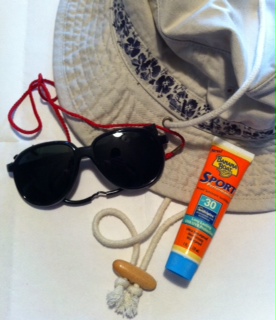
2. Sun protection (sunglasses and sunscreen)
Sunglasses are indispensable, and you'll need extra-dark glacier glasses if you're planning prolonged travel on snow or ice. Select sunglasses that block 100% of ultraviolet light (UVA and UVB)-a key function of quality lenses.
UVB rays, the rays that can burn your skin, have been linked to the development of cataracts.
Wraparound lenses keep light from entering the corners of your eyes and also help buffer eyes from wind.
Sunscreen, health experts advise choosing 1) a formula that offers a sun protection factor (SPF) of least 15, though SPF 30 is recommended for extended outdoor activity and 2) one that blocks both UVA and UVB rays.
Clothing, not all clothing will block UV rays. Look for garments that specify UV blocking or thoses with a dense weave. Where hats with brimes to procect your face and ears.
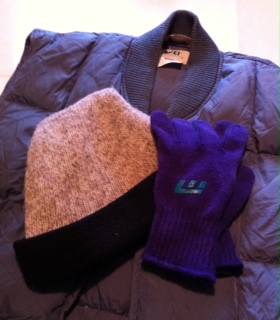
3. Insulation (extra clothing)
Conditions can abruptly turn wet, windy or chilly in the backcountry, so it's smart to carry an additional layer of clothing in case something unexpected (you get hurt or lost, for example) prolongs your exposure to the elements.
Common options include a layer of underwear (tops and bottoms), an insulating hat, extra socks and a synthetic jacket or vest. And yes, humans lose significant heat through their heads. Thus, according to Mountaineering , it's smart to pack a hat or balaclava "because they provide more warmth for their weight than any other clothing article."
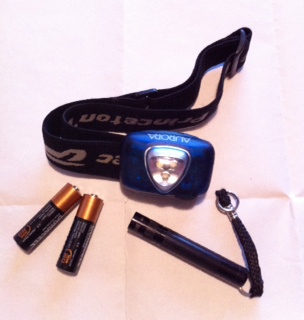
4. Illumination (headlamp/flashlight)
Headlamps are the light source of choice in the backcountry. Reasons:
- Hands-free operation (their No. 1 advantage over flashlights)
- Low weight
- Compact size (so they occupy minimal space in your pack)
- Long battery life (in models using light-emitting diodes, or LEDs)
Many headlamps also offer a strobe mode. It's a great option to have for emergency situations. Headlamps offer their longest battery life while in strobe mode.
Always carry spare batteries.
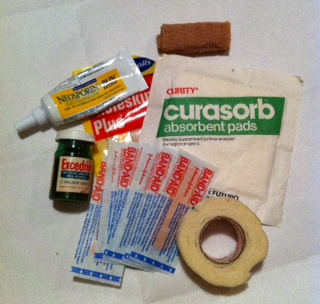
5. First-aid supplies
Pre-assembled first-aid kits take the guesswork out of building your own kit, though many people personalize these kits to suit individual needs. Any kit should include treatments for blisters, adhesive bandages of various sizes, several gauze pads, adhesive tape, disinfecting ointment, over-the-counter pain medication, pen and paper.
6. Fire (waterproof matches/lighter/candles)
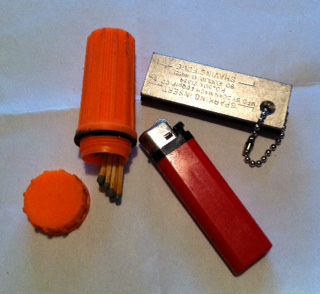
Matches should be the waterproof variety, or they should be stored in a waterproof container. Take plenty and ensure they are kept dry. Paper matchbooks are often too flimsy and poorly constructed to be trusted for wilderness use.
Mechanical lighters are handy, but always carry some matches as a backup.
Firestarter , as the name implies, is an element that helps you jump-start (and possibly sustain) a fire. Of all the classic Ten Essentials, it is probably the one least commonly carried by wilderness travelers. But should you get stranded overnight in the boonies and you start to shiver, you need the means to build an emergency fire.
How to build and start a fire is not one of the ten essentials but very important since you will not have an unlimited supply of matches, time or strength.
If you are not proficient at building outdoor fires practice at home or at a park.
7. Repair kit and tools
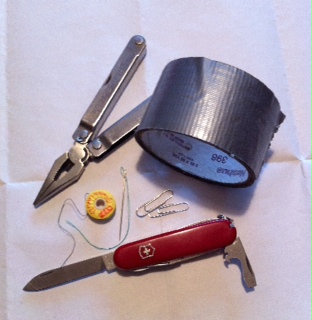
Knives or multitools are handy for gear repair, food preparation, first aid, making kindling or other emergency needs. A basic knife should have at least 1 foldout blade (more likely 2), 1 or 2 flathead screwdrivers, a can opener and (though some people will call this a luxury) a pair of foldout scissors. The more complex your needs (if, for example, you are leading an inexperienced group), the more options you may want in your knife or tool.
8. Nutrition (extra food)
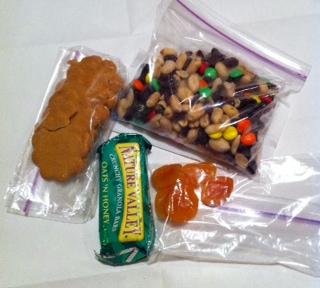
Always pack some extra food, like GORP, nuts, dired fruits, jerky or make an extra sandwhich
Nuts pack a lot of calories for the weight and volume.
9. Hydration (extra water)
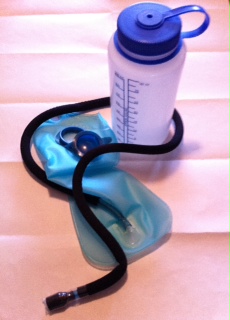
Water is life. Proper hydration is important for muscles to function, staying warm and thinking clearly. Dehydration on the other hand can cause cramps, nausea, poor decisions and hypothermia. Signs of dehydration are flu like symptoms, urinating infrequently, urine that is dark yellow or orange and acrid. When hydrated your urine is light yellow or clear.
Carry at the minimun a one liter/quart water bottle.
You should also carry some means for treating water, whether it is a filter/purifier or chemical treatment.
10. Emergency shelter
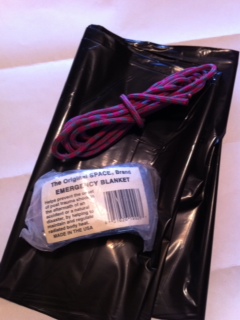
If you get lost or injured it can be hours before help can arrive, plenty of time for hyperthermia to take you. Options include an ultralight tarp, a bivy sack, an emergency space blanket (which packs small and weighs just ounces), even a large plastic trash bag.
The Original Ten Essentials List
- Map
- Compass
- Sunglasses and sunscreen
- Extra clothing
- Headlamp/flashlight
- First-aid supplies
- Firestarter
- Matches
- Knife
- Extra food
web design by plexus designare a division of ACME InterGalactic